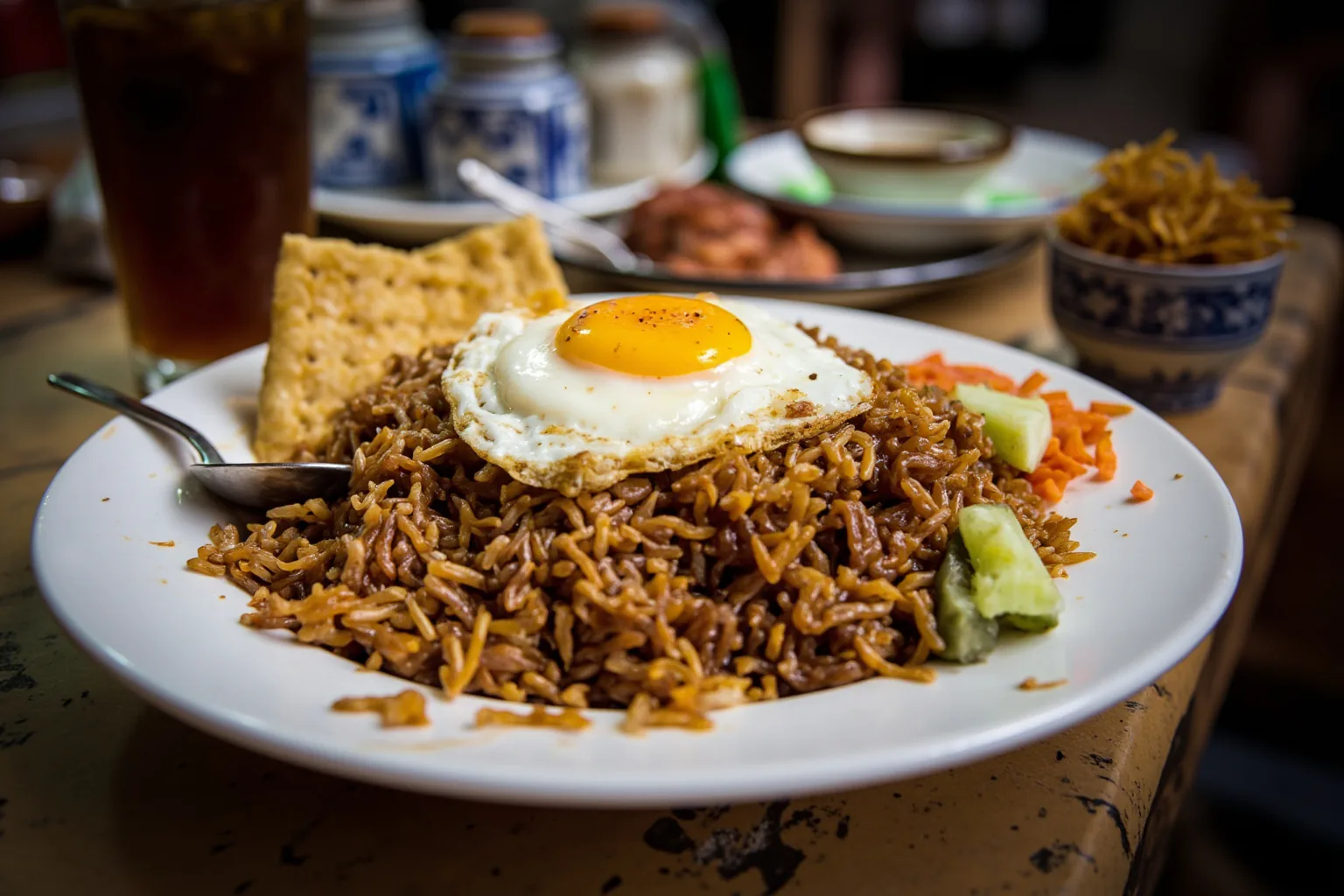
印尼炒飯
一种印度尼西亚炒饭,用甜酱油、红葱头、大蒜、罗望子和辣椒烹制,通常上面加一个煎蛋。
Preparation
No detailed steps recorded yet.
You may also explore
Sources
Claim: An Indonesian fried rice dish cooked with kecap manis (sweet soy sauce), shallots, garlic, tamarind, and chilli, typically topped with a fried egg.
Wikipedia. (2026). Nasi Goreng. Retrieved from https://en.wikipedia.org/wiki/Nasi_goreng
https://en.wikipedia.org/wiki/Nasi_gorengsecondary
About this dish
Nasi goreng is the Indonesian and Malay name for fried rice. The base preparation: pre-cooked rice stir-fried in a small amount of oil or margarine and seasoned with sweet soy sauce, shallots, garlic, ground shrimp paste, tamarind, and chilli. It is commonly served with additional ingredients — egg, chicken, prawns, vegetables. The dish is widely consumed across Maritime Southeast Asia, particularly in Indonesia, Malaysia, Singapore, Brunei, and southern Thailand, where it is part of daily meals, street-food culture, and festive cooking. Nasi goreng is distinguished from Chinese fried rice by its aromatic and smoky flavour from caramelised sweet soy sauce and powdered shrimp paste, and by being generally spicier. It is regarded as a national dish of Indonesia, and in Malaysia is officially recognised as part of the country's national culinary heritage.