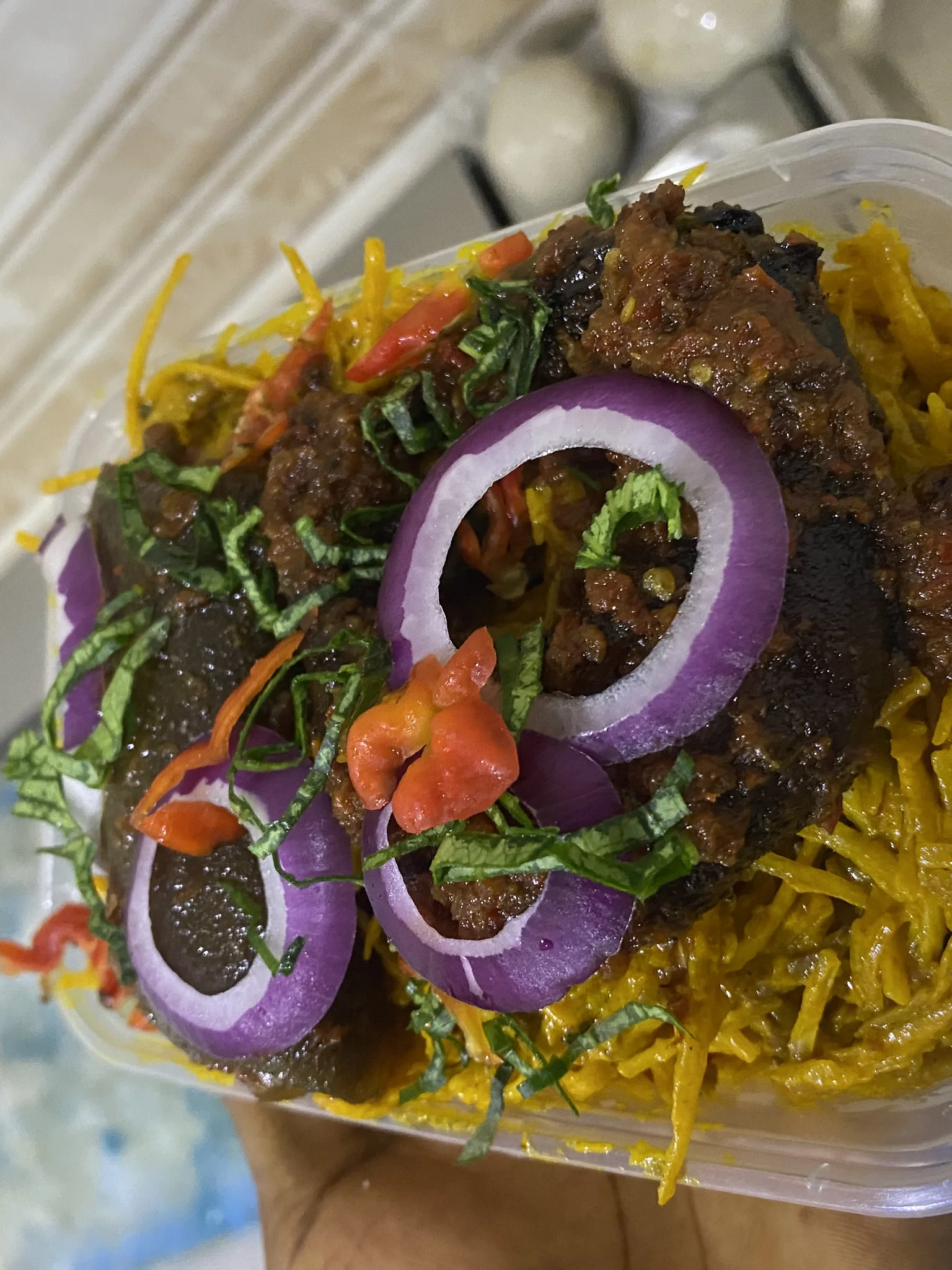
African Salad
A Nigerian cassava food of the Igbos, made by peeling, washing, cooking, slicing, and soaking cassava for a day. Shredded dried cassava is softened in boiled water and covered for a few minutes.
unevidencedThis dish was found through Wikipedia and is classified, but its claims have not yet been checked against a source. Treat the details as a starting point, not as settled fact.
You may also explore
About this dish
Abacha is a product of cassava tubers. When the processing of it is done from scratch, harvested cassava is obtained, peeled, washed, cooked and sliced into desired sizes or shapes. It is soaked for a day. It could be prepared instantly as abacha or sun-dried for future use. Shredded dried cassava first needs to be softened by soaking in boiled water and covered up for a few minutes. Abacha is quite different from mpataka. Mpataka is a cassava snack made by boiling the cassava, cutting it into smaller pieces and soaking it in running water for 12–36 hours. It is eaten with akị bekee, ube and ube ọkpoko. In some places across Igboland, mpataka is also called abacha mmiri, eberebe or jigbo, iboh or iwakpu.