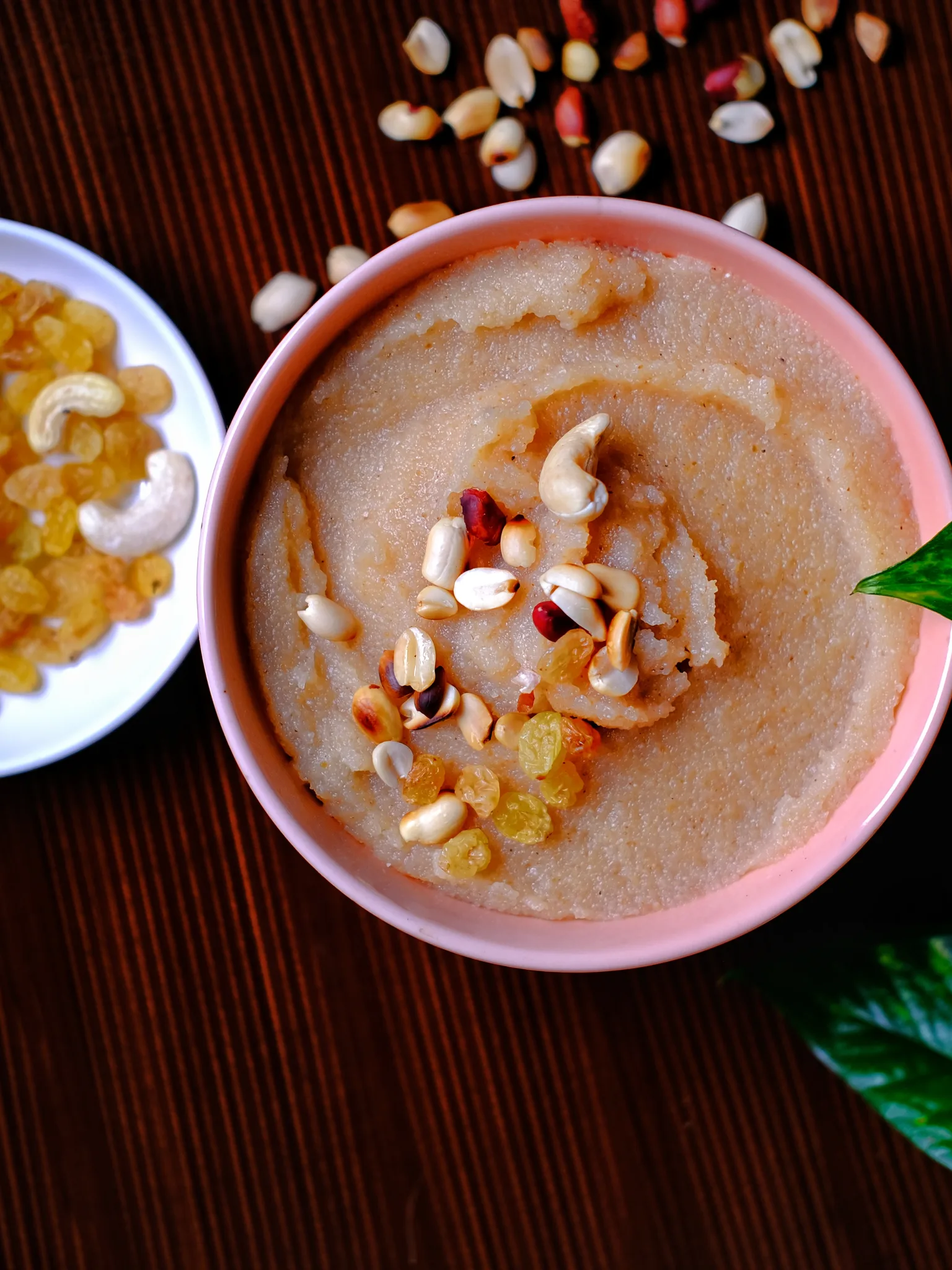
Suji ka halwa: সকাল ও বিকালের নাশতায় রুটি, পরোটা কিংবা গরম ফুলকো লুচির সাথে সুজির হালুয়া অনন্য। অন্যান্য হালুয়া তৈরির মত ঝামেলা নেই বলে চটজলদি তৈরি করে নেওয়া যায় বাড়তি ঝামেলা ছাড়াই।
Suji ka halwa: সকাল ও বিকালের নাশতায় রুটি, পরোটা কিংবা গরম ফুলকো লুচির সাথে সুজির হালুয়া অনন্য। অন্যান্য হালুয়া তৈরির মত ঝামেলা নেই বলে চটজলদি তৈরি করে নেওয়া যায় বাড়তি ঝামেলা ছাড়াই।Munni Akter Mim (https://commons.wikimedia.org/wiki/User:Munni_Akter_Mim) — Own work via Wikimedia Commons (https://commons.wikimedia.org/wiki/File%3A%E0%A6%B8%E0%A7%81%E0%A6%9C%E0%A6%BF%E0%A6%B0_%E0%A6%B9%E0%A6%BE%E0%A6%B2%E0%A7%81%E0%A6%AF%E0%A6%BC%E0%A6%BE.jpg)CC BY-SA 4.0
Dishes›Suji ka halwa
Asia

Suji ka halwa

A South Asian halva of semolina toasted in ghee or oil, then mixed with sugar syrup, honey, or jaggery powder. It may be served at breakfast or as dessert.

unevidencedThis dish was found through Wikipedia and is classified, but its claims have not yet been checked against a source. Treat the details as a starting point, not as settled fact.

Origin
Asia
Variants
0
Category
—
Contributors
0

You may also explore

About this dish

It can be served for breakfast or as a dessert. The basic recipe is made with just semolina, sugar or honey, ghee, and sometimes milk. Variations on this include dried or fresh fruits, nuts, shredded coconut, and other toppings. Wheat flour is often used as a substitute if semolina is not available, but virtually any starch can be used to make suji ka halwa.

Created by an unknown editor
94 views · 0 edits · 0 contributors
Last updated 2026-10-30