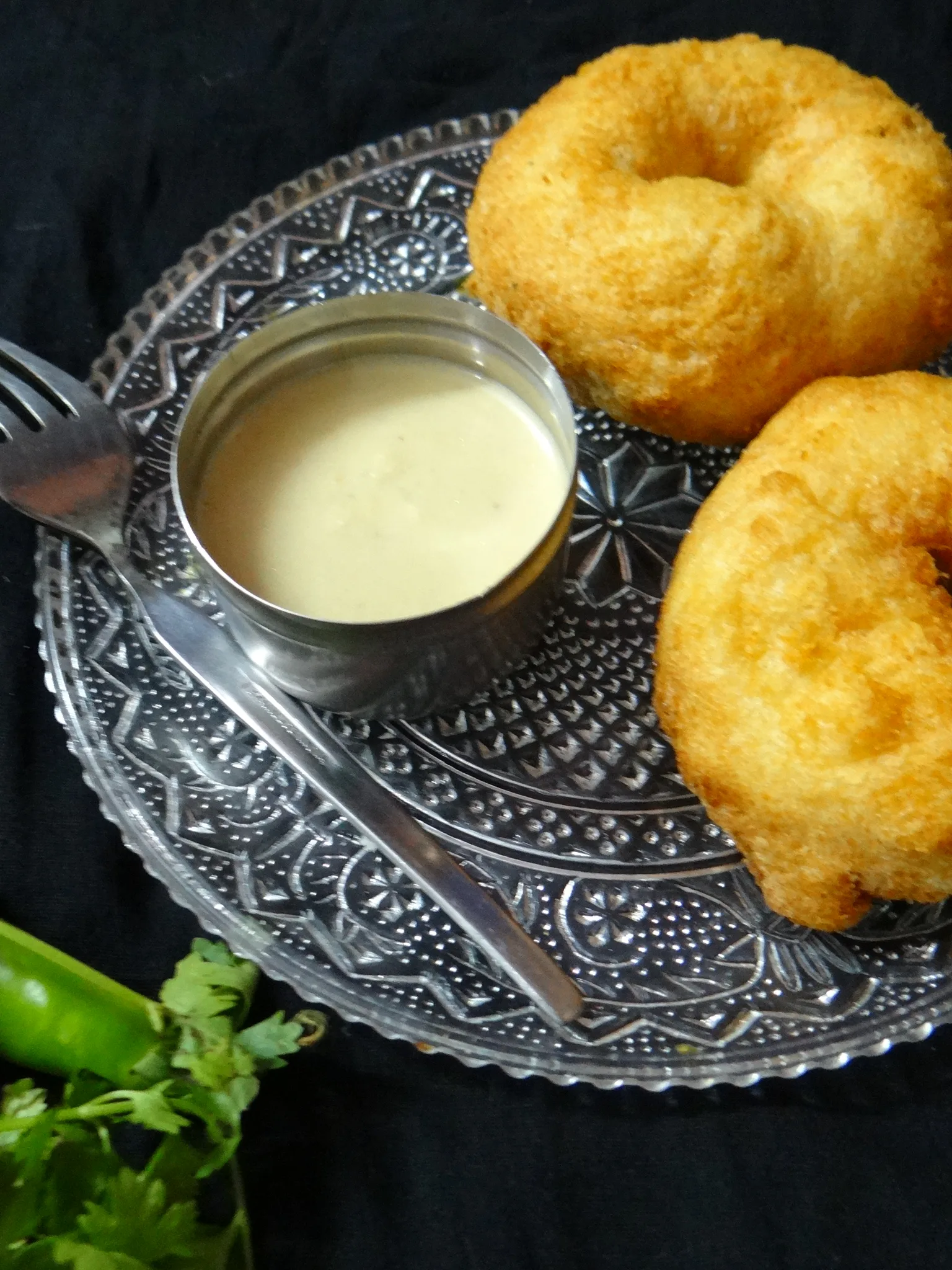
Vadai
Gorengan lezat asal Asia Selatan yang dibuat dari adonan kacang-kacangan atau serealia yang dihaluskan, dibentuk menjadi cincin atau keping, lalu digoreng hingga kecrispen di luar dan empuk di dalam.
Preparation
No detailed steps recorded yet.
You may also explore
Sources
Claim: A South Asian savory fritter made from a ground legume or grain batter, shaped into rings or patties and fried until crisp outside and tender within.
Wikipedia. (2026). Vada. Retrieved from https://en.wikipedia.org/wiki/Vada_(food)
https://en.wikipedia.org/wiki/Vada_(food)secondary
About this dish
Vada is a broad category of savory, fried snacks from South India, typically made from a batter or dough of lentils, chickpeas, or other legumes, sometimes combined with vegetables and spices. The most common forms are medu vada (made from urad dal, shaped like a doughnut, and crisp outside with a soft interior), masala vada (a flatter, spiced chickpea-pea patty), and dahi vada (vadas soaked in yogurt and topped with chutneys). Vadas are typically served as breakfast or snack food, accompanied by coconut chutney and sambar.
The dish's roots are ancient: lentil-based fried foods similar to vada are mentioned in early Tamil and Sanskrit literature, and the term appears in South Indian texts dating back over a thousand years. Today vadas are sold by street vendors, served in restaurants, and made at home across South India, and have become familiar to international audiences through South Indian restaurants and diaspora communities. They are sometimes stuffed or topped with vegetables, peanuts, or coconut, reflecting regional variation.
The texture of a vada is its signature: crisp on the outside from a brief deep-frying, soft and airy on the inside from the fermented batter and the steam released during cooking. Medu vada — perhaps the most common form — is made from a wet batter of urad dal, green chilies, ginger, curry leaves, and black pepper, dropped by spoonful into hot oil. The batter is naturally light because the dal is ground to a fluffy, aerated paste. Vadas are sometimes served soaked (dahi vada), in a sambar (sambar vada), or as part of a thali. The dish is also a popular temple food, made as a daily offering in many South Indian Hindu temples.
[Source: Wikipedia — Vada (food), accessed 2026-10-17, https://en.wikipedia.org/wiki/Vada_(food)]