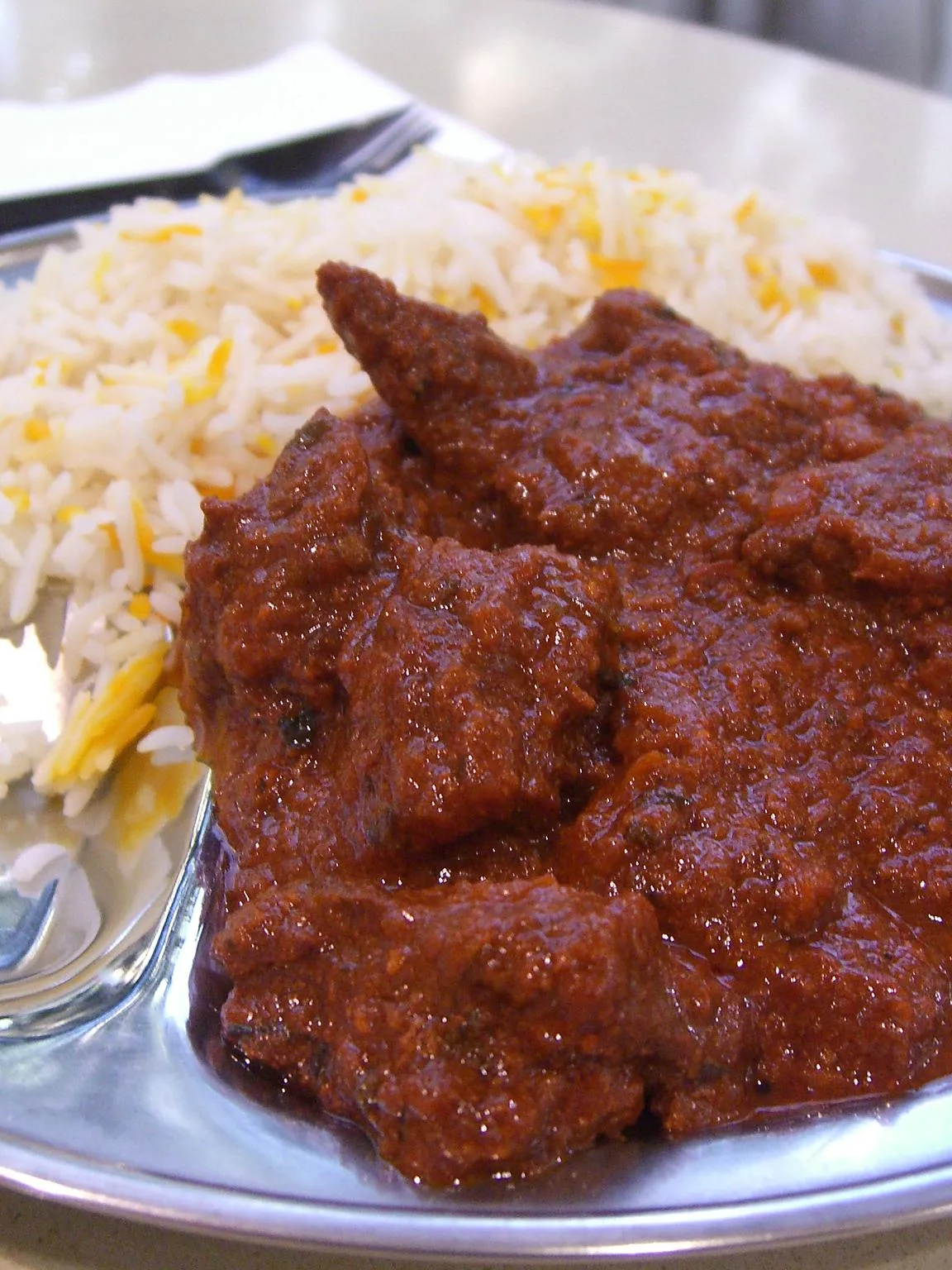
Vindaloo
Un curry goan d’origine portugaise : de la viande (traditionnellement du porc) marinée dans du vinaigre, de l’ail et du piment du Cachemire, puis cuite avec des oignons, du gingembre et des épices échauffantes.Le plat portugais carne de vinha d’alhos est devenu le vindaloo au fil des siècles.
How this dish moved
Journey
Key beats in the story of Vindaloo — places, approximate dates, and how confident we are in each claim.
Carne de vinha d'alhos — meat marinated in wine vinegar and garlic — travels with Portuguese sailors.
Wikipedia. (2024). Vindaloo. https://en.wikipedia.org/wiki/Vindaloo
In Portuguese Goa the marinade meets Kashmiri chilli and local spice; vinha d'alhos becomes vindaloo.
Wikipedia. (2024). Vindaloo. https://en.wikipedia.org/wiki/Vindaloo
British curry-house vindaloo becomes a hotter, tomato-forward take — often far from the Goan original.
Loading journey map…
Part of the Curry and Spiced Stew lineage.
Preparation
No detailed steps recorded yet.
You may also explore
Sources
Claim: A Goan curry of Portuguese origin: meat (traditionally pork) marinated in vinegar, garlic, and Kashmiri chili, then cooked with onions, ginger, and warm spices. The Portuguese carne de vinha d'alhos became vindaloo over centuries.
Wikipedia. (2026). Vindaloo. Retrieved from https://en.wikipedia.org/wiki/Vindaloo
https://en.wikipedia.org/wiki/Vindaloosecondary
About this dish
Vindaloo is a pungent, vinegar-based curry best known today in its British-Indian restaurant form, but its roots lie in colonial Goa. Portuguese settlers in the 15th century brought carne de vinha d'alhos — meat marinated in wine vinegar and garlic — to India's west coast, where local cooks adapted the recipe using palm vinegar and Kashmiri chilies. The name "vindaloo" comes from the Portuguese vinha d'alhos ("wine and garlic"). When the dish traveled to the UK with Goan migrants in the 19th and 20th centuries, it became a fixture of British curry houses, often served as the hottest item on the menu, far spicier than the Goan original.
Traditional Goan vindaloo is tangy rather than fiery, with pork as the most common meat, flavored with vinegar, garlic, ginger, cumin, mustard seeds, and a small amount of Kashmiri chili for color and warmth. The British restaurant version, popularised from the 1970s onward, typically uses more chili, sometimes tomato, and lamb or chicken. The dish is now common across South Asia, the UK, and globally in Indian restaurants, and remains closely associated with Goan Catholic cuisine.
In Goa itself, vindaloo is traditionally eaten with sannas (steamed rice cakes) or pão (Portuguese-influenced bread), and is considered a festive dish, especially around Christmas. The sharp vinegar-based marinade was originally a preservation technique, useful in a tropical climate before refrigeration. The dish's global reputation for extreme heat is, in large part, a British invention: restaurants used vindaloo as the "hottest curry" on their menus, and many diners ordered it as a test of fortitude, which encouraged ever-more-aggressive spicing in the restaurant version.
[Source: Wikipedia — Vindaloo, accessed 2026-10-17, https://en.wikipedia.org/wiki/Vindaloo]