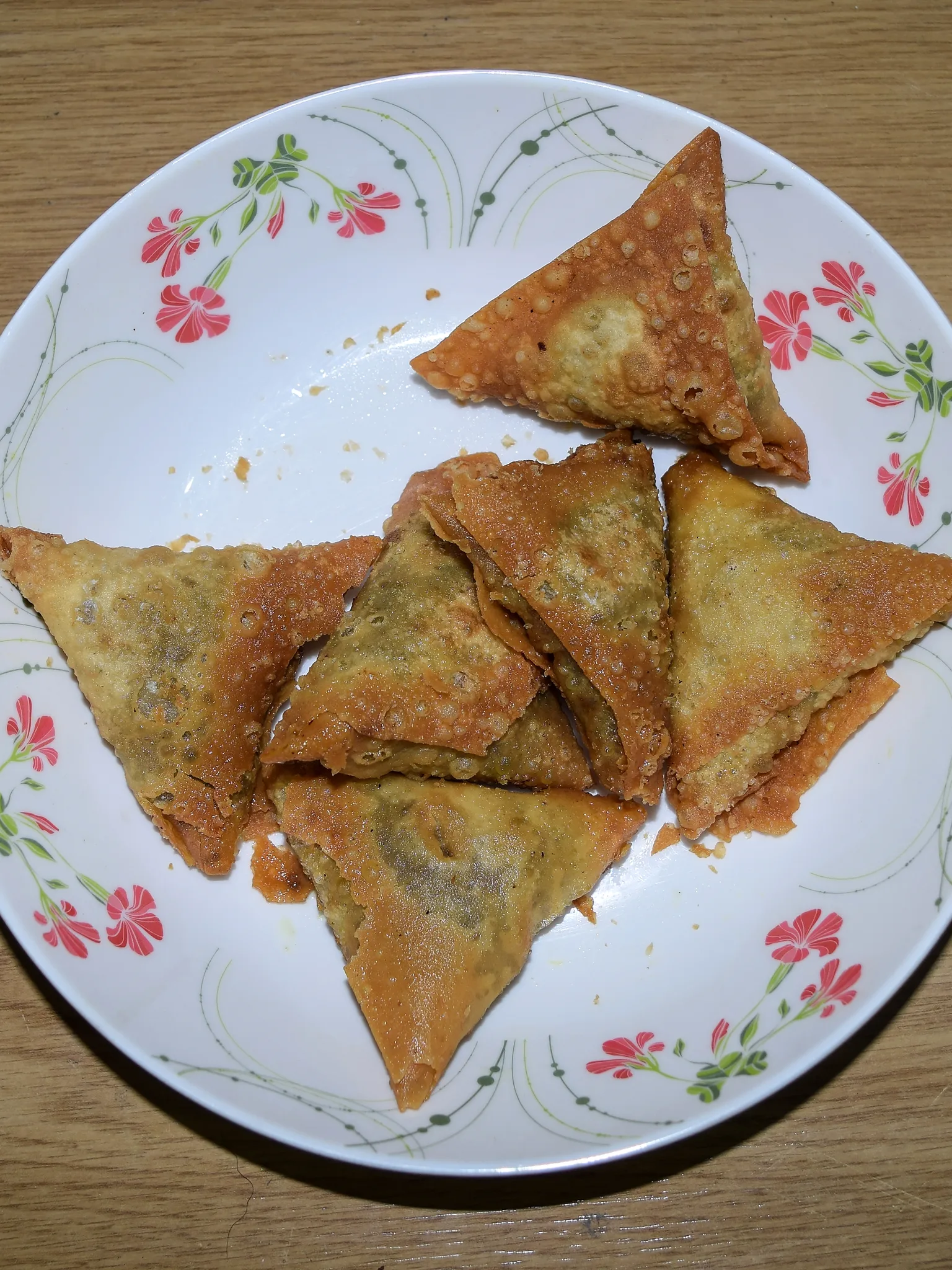
Samosa
Ein knuspriges, dreieckiges Gebäck, gefüllt mit gewürzten Kartoffeln, Erbsen, Linsen, Fleisch oder Gemüse, das in Südasien sowie in der Diaspora gebraten oder gebacken wird.
Preparation
No detailed steps recorded yet.
You may also explore
Sources
Claim: A crisp, triangular pastry filled with spiced potatoes, peas, lentils, meat, or vegetables and fried or baked across South Asia and its diaspora.
Wikipedia. (2026). Samosa. Retrieved from https://en.wikipedia.org/wiki/Samosa
https://en.wikipedia.org/wiki/Samosasecondary
About this dish
A samosa is a fried or baked pastry turnover with a savory filling, most commonly a spiced mixture of mashed potatoes, peas, onions, and sometimes lentils or ground meat. The pastry is made from a simple flour-and-water (or flour-and-oil) dough, rolled thin, folded into a cone, stuffed, and sealed before being deep-fried until crisp and golden. The triangular or pyramidal shape is the most recognizable form, though regional variations include half-moon, cone, and tetrahedral shapes.
The dish's origins are not Indian: the word "samosa" derives from the Persian sanbosag (and ultimately from the even older Persian word sanbusa), and earlier forms of the stuffed pastry are documented in Central Asia and the Middle East from at least the 10th century. The samosa arrived in the Indian subcontinent by the 13th or 14th century through Persian-influenced courts and trade routes, and evolved into the spiced-potato version now associated with Indian street food. Today samosas are a staple across India, Pakistan, Bangladesh, Nepal, and across South Asian and Middle Eastern diaspora communities, and are often served with mint or tamarind chutney.
The samosa's appeal is its portability, long shelf life, and the contrast between a crisp, oily shell and a savory, spice-laden interior. In South Asia, street vendors fold the dough and stuff the filling on site, then fry in large woks. In the Middle East, smaller versions known as sambousek or sambusa are popular, often filled with cheese or meat. The Indian diaspora has spread the samosa across the world, and it is today one of the most internationally recognizable Indian snacks, served at parties, sold in supermarkets, and adapted by chefs in countless regional styles.
[Source: Wikipedia — Samosa, accessed 2026-10-17, https://en.wikipedia.org/wiki/Samosa]